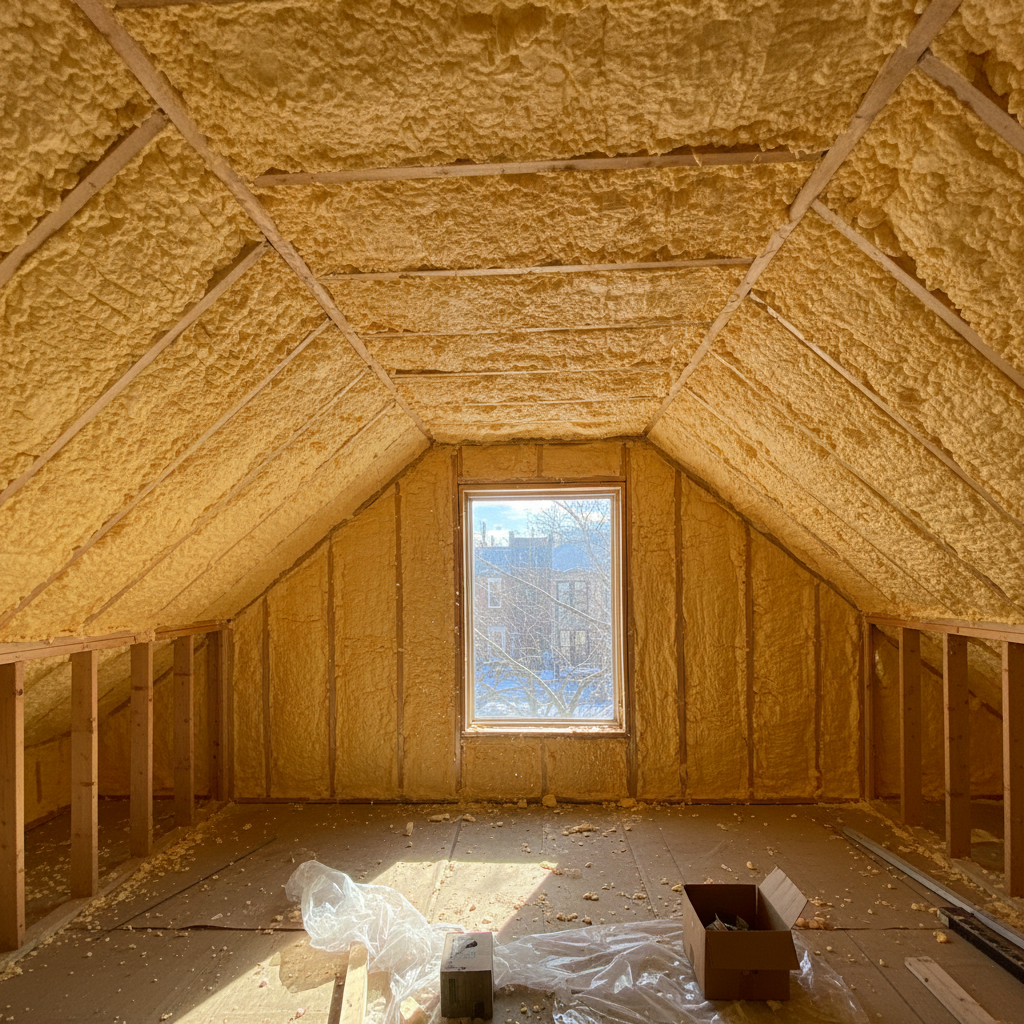
You've got closed-cell spray foam in your home, or you're thinking about it. Smart move. It's one of the best ways to keep your Brooklyn brownstone or row house comfortable and energy-efficient. But it's not a 'set it and forget it' kind of deal, especially with our wild swings in weather here in New York.
When's the Best Time to Schedule Spray Foam Installation?
People often think about insulation when it's freezing outside, or when the AC is struggling in August. And yeah, those are good motivators. But honestly, the best time to get closed-cell spray foam installed is usually in the shoulder seasons – spring or fall. Why?
Milder Temps: Extreme heat or cold can affect the spray foam's curing process. While modern closed-cell foams are pretty robust, ideal conditions mean a better, more consistent application. We're talking about temperatures generally between 40°F and 90°F. In Brooklyn, that gives us a pretty wide window in spring and fall.
Less Disruption: If we're working in your attic or crawl space, doing it when it's not boiling hot or freezing cold makes it easier on everyone, including my crew. Plus, you're less likely to be relying heavily on your HVAC system during these times, so a temporary shut-down for the work won't be as noticeable.
Beat the Rush: Everyone wants insulation when the bills skyrocket. Scheduling in the spring means you're ready for summer's heat. Fall means you're buttoned up before winter's chill. You'll often find it easier to get on our schedule at Brooklyn Spray Foam during these times too.
Weather Conditions That Affect the Work
It's not just the temperature outside that matters; humidity and even wind can play a role. Closed-cell spray foam needs to adhere properly and cure correctly. High humidity, especially in an unventilated space, can sometimes slow things down. Strong winds can make exterior applications tricky, though most of our work is inside.
Rain? Not usually an issue for interior work, obviously. But if we're doing something like insulating a rim joist in an exposed basement or a crawl space that's prone to dampness, we'll want to make sure the area is as dry as possible before we start. We're always checking the forecast and assessing the conditions on-site to make sure we're setting ourselves up for a perfect job.
Protecting Your Investment Year-Round
Once it's in, closed-cell spray foam is tough. It's not going to sag or settle like some other insulation types. But there are still a few things you can do to make sure it keeps doing its job for decades.
Keep it Dry: This is huge. While spray foam itself is moisture-resistant, you don't want standing water or persistent leaks. If you've got a leaky roof or a plumbing issue, get it fixed. Water can degrade anything over time, and it can also lead to mold growth in other areas. Your spray foam will likely be fine, but the surrounding structure won't be.
Ventilation Matters: Even with excellent insulation, proper ventilation is key for indoor air quality and preventing moisture buildup. This is especially true in older Brooklyn homes where air exchange might have been less of a concern historically. We're not talking about letting all your conditioned air out, but smart ventilation systems can work wonders.
Pest Control: Spray foam is a great deterrent for pests because it seals up all those tiny entry points. But if you've got an existing pest problem, deal with it before insulation, or make sure it's under control afterward. Rodents can chew through almost anything if they're determined enough, though spray foam is definitely not their first choice.
Avoid Physical Damage: Don't go poking holes in it or tearing it out unless you know what you're doing. If you need to run new wiring or plumbing through an insulated area, it's best to consult with a professional. We can advise you on the best way to do it without compromising the insulation's integrity.
Your closed-cell spray foam is a long-term investment in your home's comfort and efficiency. A little common sense and seasonal awareness go a long way in making sure it pays off for years to come. If you ever have questions about your insulation, or if you're ready to get a quote, just give us a call at Brooklyn Spray Foam.