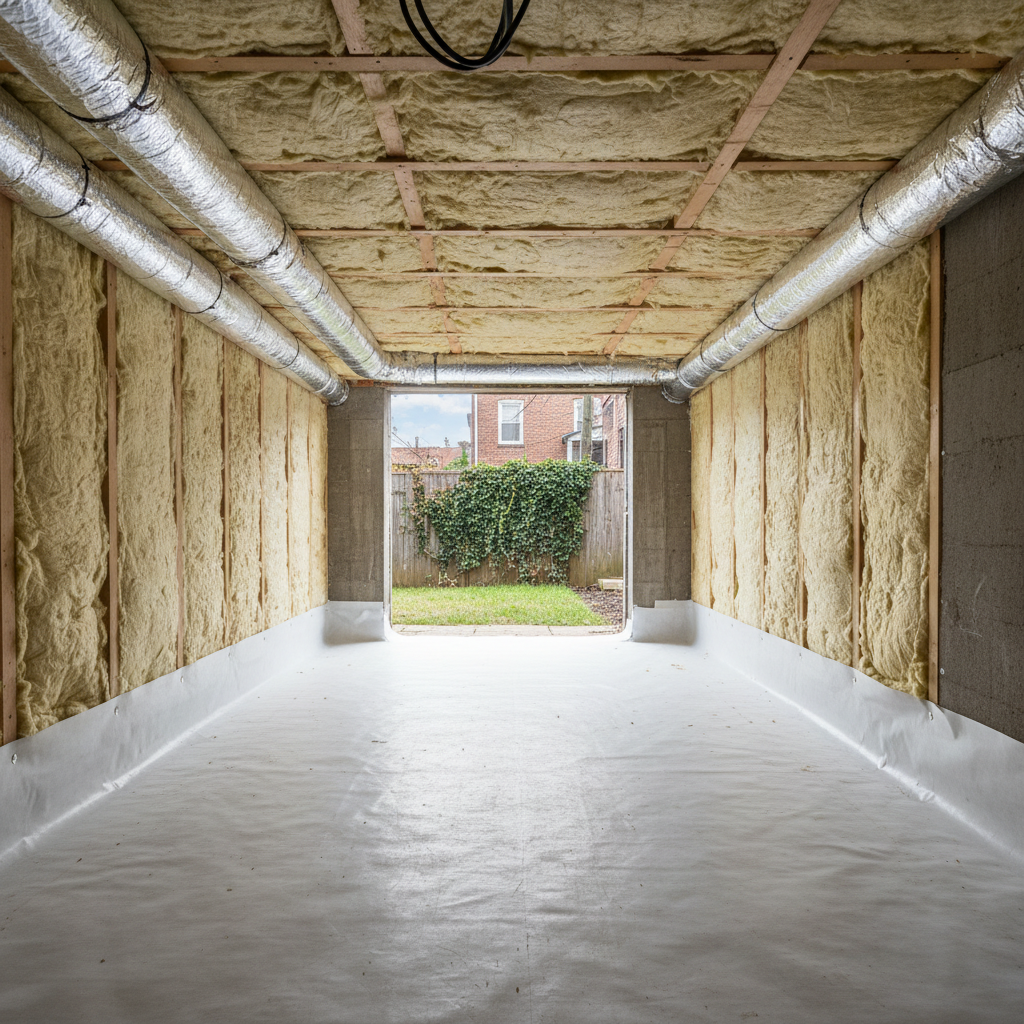
Alright, let's talk crawl spaces. If you've got one under your Brooklyn home, you know it's often out of sight, out of mind. But that's exactly why it can become a real problem spot, especially when it comes to insulation. I've been doing this a long time, and I've seen folks in places like Bushwick and Bed-Stuy make the same few mistakes over and over again. You don't want to be one of 'em, so pay attention.
Mistake #1: Ignoring Moisture & Ventilation
This is probably the biggest one, and it's a killer. You can throw all the insulation you want down there, but if your crawl space is damp, humid, or has standing water, you're just asking for trouble. Insulation, especially fiberglass or cellulose, acts like a sponge. It'll soak up that moisture, lose its R-value, and become a perfect breeding ground for mold and mildew. And trust me, you don't want that funk seeping up into your living space.
Before you even think about insulation, you gotta address the moisture. That means:
- Checking for leaks from plumbing or foundation cracks.
- Making sure your gutters and downspouts are directing water away from the house.
- Considering a vapor barrier on the ground to stop moisture from rising through the soil.
- Proper ventilation is key too. Sometimes, sealing vents and dehumidifying is the right call for an encapsulated crawl space, but you need a pro to assess your specific situation. Just slapping insulation over a wet problem is a waste of money and can create bigger headaches down the road.
Mistake #2: Choosing the Wrong Type of Insulation
Not all insulation is created equal, especially for a crawl space. You might think, "Insulation is insulation, right?" Wrong. Here's why:
- Fiberglass Batts: These are cheap, I get it. But in a crawl space, they're often a terrible choice. They sag, they get damp, and they become a home for rodents and insects. Once they're wet, their insulating power goes to zero. Plus, they're a pain to install properly overhead.
- Open-Cell Spray Foam: While great for some applications, open-cell foam can absorb water. In a crawl space, where moisture is always a concern, this can be problematic. You want something that resists water, not absorbs it.
- Closed-Cell Spray Foam: Now we're talking. This stuff is dense, creates an air seal, and doesn't absorb water. It's more expensive upfront, but it's durable, keeps pests out, and performs consistently even in damp conditions. It's what we often recommend at Brooklyn Spray Foam for these tough environments.
- Rigid Foam Boards: These are a solid option too, especially for walls or under the subfloor. They resist moisture and provide good R-value. They need to be sealed properly at the seams to be effective.
The key is to pick something that can handle the unique environment of a crawl space. It's not a dry, climate-controlled attic.
Mistake #3: DIYing Without Knowing What You're Doing
Look, I'm all for a homeowner tackling projects. But a crawl space isn't like painting a wall. It's often a tight, dirty, and potentially hazardous environment. You're dealing with:
- Confined Spaces: It's not fun crawling around down there.
- Pests: Spiders, rodents, maybe even raccoons.
- Mold & Mildew: Breathing in spores is no joke.
- Asbestos/Lead Paint: Older Brooklyn homes, especially those built before the 70s, might have these hazards. Disturbing them without proper protection is incredibly dangerous.
- HVAC Ducts & Plumbing: You can easily damage these if you're not careful.
- Improper Installation: Gaps, unsealed seams, or poorly installed vapor barriers will negate all your hard work and money.
I've seen homeowners try to save a buck and end up with a bigger mess. They'll miss critical spots, install insulation backward, or not seal things properly. Then they call us to fix it, and it costs more than if they'd just hired us from the start. A professional knows how to safely navigate the space, identify potential issues, and install the right materials correctly.
Mistake #4: Not Considering the Whole System
Your crawl space isn't an isolated box. It's connected to your home's foundation, your plumbing, your HVAC system, and ultimately, your indoor air quality. A lot of the air you breathe in your living room comes up from your crawl space.
If you just insulate the floor joists but leave the crawl space vents open and the ground uncovered, you're not really solving the problem. You're still bringing in cold, damp air in the winter and hot, humid air in the summer. You're also creating a stack effect, pulling that crawl space air right up into your house.
A good crawl space insulation plan often involves an 'encapsulation' approach. This means sealing off the crawl space from the outside, installing a heavy-duty vapor barrier on the ground and up the walls, and then insulating the perimeter walls or the subfloor. Sometimes, it also includes a dehumidifier to control humidity levels. This creates a conditioned, healthier space that's part of your home's thermal envelope, not just a dirty, damp void.
Don't just think about insulation; think about the entire crawl space as a system. Get it right the first time, and you'll save on energy bills, improve your indoor air quality, and avoid those nasty surprises down the line.
Mistake #5: Hiring the Cheapest Guy
This one's a classic. You get a few quotes, and one guy is way cheaper than everyone else. Red flag, folks. I'm not saying every cheap bid is bad, but in this business, you often get what you pay for. A contractor who's cutting corners on price might be:
- Using inferior materials.
- Not properly preparing the site (e.g., ignoring moisture issues).
- Not carrying proper insurance or licenses.
- Rushing the job, leading to poor installation.
- Not guaranteeing their work.
Ask for references. Check their reviews. Make sure they're licensed and insured. Ask about their process for moisture control. A reputable contractor, especially one experienced with Brooklyn's older housing stock and varied soil conditions, will explain everything clearly and stand by their work. It's an investment in your home's health and efficiency, so don't cheap out on the most important part.
Do your homework. Ask the right questions. And if something feels off, trust your gut. Your crawl space might be out of sight, but its condition impacts your whole home.