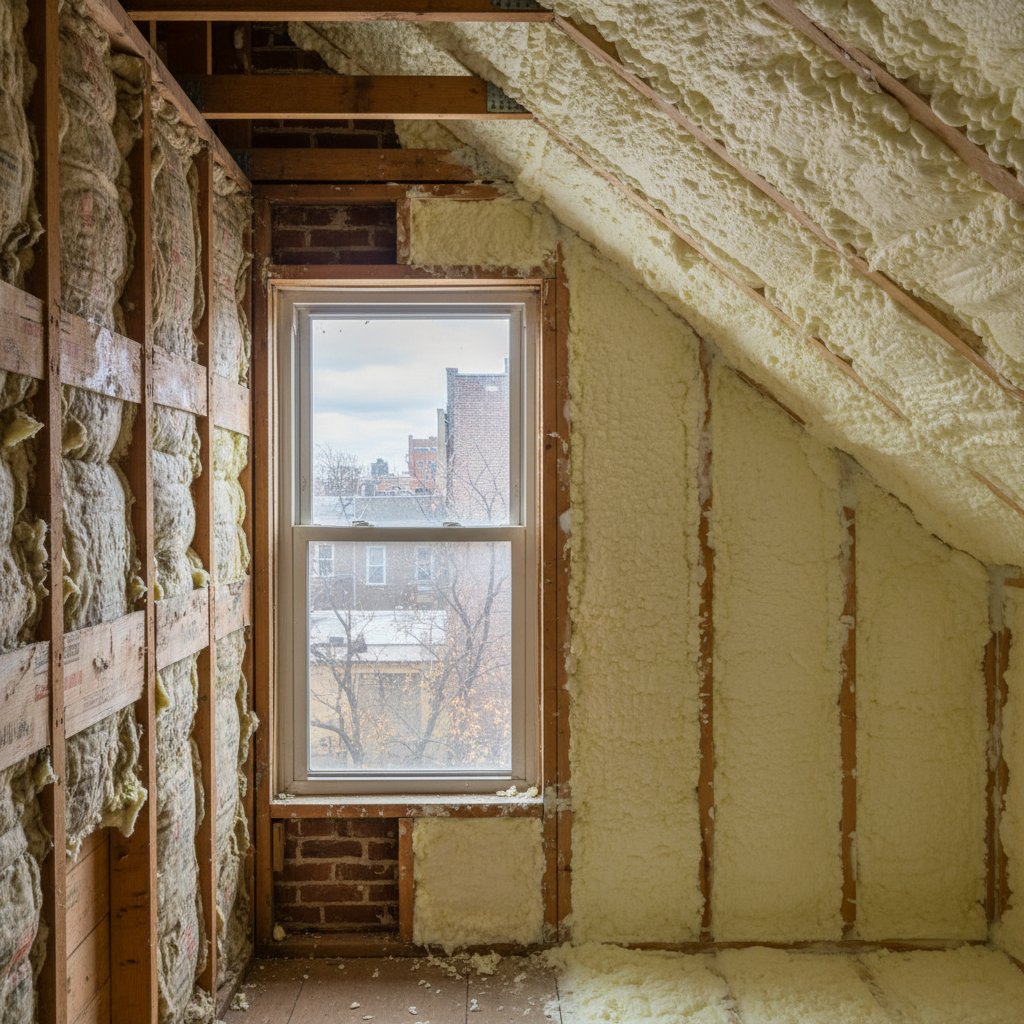
Alright, so you're looking into open-cell spray foam for your place here in Brooklyn. Smart move. It's a fantastic insulation choice, especially for those drafty old brownstones or even newer construction that just isn't cutting it. But once you decide on open cell, you're not done yet. There are a couple of main ways we typically apply it: 'flash and batt' or 'full cavity fill.' And yeah, they're pretty different, especially when you're thinking about cost, performance, and what you're actually getting.
What's the Deal with Open-Cell Anyway?
Before we dive into the two methods, let's just quickly touch on open-cell foam itself. It's light, it expands like crazy, and it's got an open cell structure, meaning air can pass through it. That's why it's great for air sealing and sound dampening, but it's not a vapor barrier like closed-cell foam. It's usually a bit cheaper per board foot than closed-cell, too, which is why a lot of folks consider it for attics, walls, and rim joists.
Flash & Batt: The Hybrid Approach
So, 'flash and batt.' What is it? It's exactly what it sounds like. We 'flash' a thin layer of open-cell spray foam – usually an inch or two – directly onto the sheathing or wall cavity. This thin layer does a killer job of air sealing all those little gaps and cracks that traditional insulation just can't touch. You know, those tiny spots around studs, electrical boxes, and plumbing penetrations that let cold air in during the winter and hot air in during the summer. Once that thin layer cures, we then come in and install traditional fiberglass or mineral wool batts over it to fill the rest of the cavity. It's a hybrid system.
Pros of Flash & Batt:
- Cost-Effective: You're using less spray foam, which is the more expensive component. The bulk of the insulation is cheaper batt material, so your overall cost is usually lower than a full fill.
- Great Air Seal: You still get that crucial air barrier from the spray foam, eliminating drafts.
- Familiar R-Value: Combining the R-value of the foam and the batts can get you to your desired insulation levels without breaking the bank.
- Moisture Management: Because it's not a full cavity fill of foam, it allows for some drying potential if any moisture somehow gets into the wall cavity. This is important in older Brooklyn homes where you might have some unexpected moisture pathways.
Cons of Flash & Batt:
- Installation Complexity: It's a two-step process, so it takes a bit more coordination and time than just spraying foam.
- Less Sound Dampening: While the foam helps, it won't be as effective at sound reduction as a full cavity of open-cell foam.
- Potential for Gaps: If the batt insulation isn't installed perfectly, you can still have small gaps that reduce overall performance.
Full Cavity Fill: Go Big or Go Home
Now, 'full cavity fill' with open-cell foam is simpler in concept. We just spray the open-cell foam directly into the entire wall or ceiling cavity until it's completely filled. The foam expands and cures, creating a monolithic, seamless layer of insulation and air sealing. It's like wrapping your house in a giant, fluffy, airtight blanket.
Pros of Full Cavity Fill:
- Superior Air Sealing: It's the best for air sealing because it fills every single nook and cranny. No gaps, no leaks.
- Excellent Sound Dampening: Open-cell foam is fantastic for reducing noise transfer. If you live on a busy street in Bushwick or near the L train, this can be a real game-changer for interior comfort.
- Faster Installation (for the foam part): Once we start spraying, it's a pretty quick process to fill those cavities.
- Consistent Performance: You don't have to worry about poorly installed batts creating cold spots. The foam does the whole job.
Cons of Full Cavity Fill:
- Higher Cost: You're using more spray foam, so the material cost is higher. This is the main reason people hesitate.
- Less Drying Potential: Because the cavity is completely filled, if moisture does get in, it can be harder for it to dry out. This is less of a concern with proper exterior flashing and house wraps, but it's something to be aware of.
- Appearance (before drywall): It's a full cavity of foam. It looks like foam. Not that it matters once the drywall is up, but it's not as neat as a thin layer of foam with batts.
Which One Should You Choose for Your Brooklyn Home?
Honestly, for most homeowners in Brooklyn, especially if you're dealing with older homes with their unique quirks and potential for air leakage, I lean towards flash and batt. Here's why:
You get 90% of the air-sealing benefits of a full fill, which is the most critical part of insulation performance, for a significantly lower cost. That air sealing is what stops those drafts that make your heating and cooling bills skyrocket. Plus, the slight drying potential is a nice insurance policy in our sometimes damp climate, especially with the older brick and stucco exteriors you see all over Park Slope and Bed-Stuy.
If budget isn't a huge concern and sound dampening is your absolute top priority – say, you're building a new home right next to a subway line or a very busy intersection – then full cavity fill might be worth the extra investment. But for the typical renovation or upgrade, flash and batt gives you the best bang for your buck. You're getting the critical air seal from the foam, and then you're topping it off with cost-effective batt insulation to hit your R-value targets.
At Brooklyn Spray Foam, we've done both methods countless times, and we can walk you through the specifics for your particular project. Every home is a little different, and what works best for a brand new addition might not be the ideal solution for a century-old row house. Give us a call, and we can figure out the right approach to make your home more comfortable and energy-efficient.