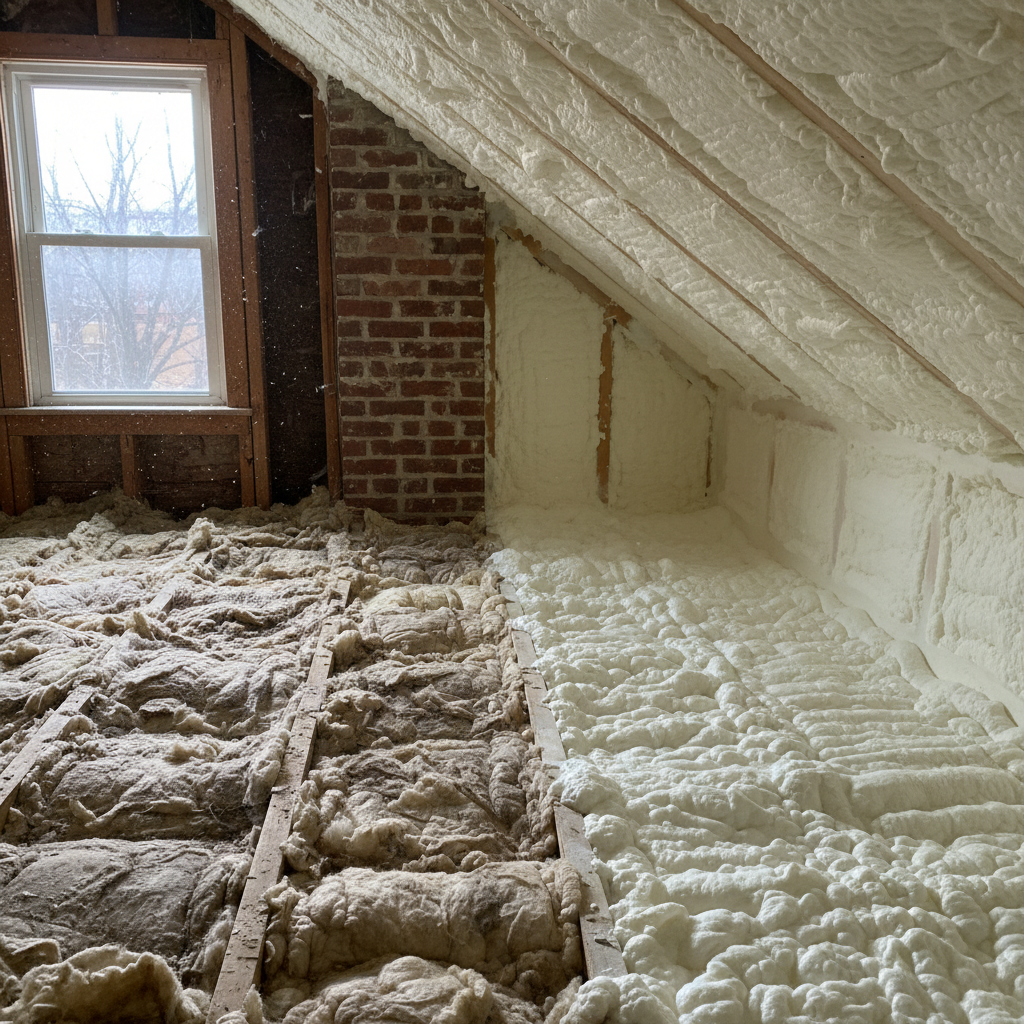
Alright, so you're thinking about open-cell spray foam for your place here in Brooklyn. Good call. It's fantastic for sealing up air leaks, quieting things down, and just making your home feel a whole lot cozier. But here's a little secret: there isn't just one type of open-cell foam. Most people assume it's all the same stuff, but you actually get to pick between standard-density and high-density open-cell. And for a city like ours, that choice can really change things.
So, What's the Real Scoop on the Difference?
Honestly, it mostly boils down to density, just like the names suggest. Standard open-cell foam usually weighs in at about 0.5 pounds per cubic foot. It's light, kind of fluffy, and expands a lot. High-density open-cell, though, is a bit heavier, often hitting around 0.8 to 1.0 pounds per cubic foot. Imagine the difference between a regular kitchen sponge and one that's a little more packed, more robust.
This density difference actually changes a few key things:
- R-Value: Standard open-cell typically gives you an R-value of roughly R-3.5 to R-3.7 per inch. High-density open-cell can nudge that up a bit, sometimes to R-4.0 or even R-4.5 per inch. It's not a huge leap, but every little bit helps, especially in those charming, older Brooklyn brownstones where space is tight.
- Air Sealing: Both types are amazing air barriers. That's a big reason why people choose spray foam, right? They puff up and fill every tiny gap, stopping drafts dead in their tracks.
- Sound Dampening: This is where high-density open-cell truly shines. Since it's denser, it's much better at soaking up sound. If you live near a busy street in Bushwick, or maybe your neighbors are a little on the loud side, this could be a real game-changer.
Cost: What's It Going to Set Me Back?
Let's be honest, cost is always on our minds. High-density open-cell foam will cost you more per board foot than the standard stuff. It uses more material, and it's a bit more specialized to produce. How much more? It varies, but you can expect to pay 15-25% extra just for the material. Installation costs might be similar, but that material price definitely adds up.
For a typical Brooklyn home, say for an attic or a full wall cavity, that extra expense can be pretty significant. You really have to weigh that against the benefits you're getting.
Durability and Upkeep
Once either type of open-cell foam is in place, it's incredibly durable. It won't settle, sag, or break down over time like some traditional insulations do. Pests aren't interested in it, and it doesn't feed mold growth (though it won't stop mold if you've got an existing water problem, obviously). You won't be doing any maintenance on the foam itself, which is nice.
The biggest durability concern for any open-cell foam is water. If it gets wet, it acts just like a sponge and holds onto that water. That's why we don't recommend it for outside applications or places that might flood. But inside an attic or a wall cavity, once it's dry and protected, it's there for the long haul.
How It Looks (Before the Drywall Goes Up, Of Course)
Once your walls are all buttoned up, you won't see any of it, so looks aren't usually a huge deal. But if you're curious, standard open-cell foam often has a very light, almost cloud-like texture. High-density open-cell will look a bit more uniform and solid, less airy. It's a subtle difference, but it's there if you're looking.
My Recommendation for Brooklyn Homeowners
Okay, so which one should you choose? Here's my honest take:
- For most standard jobs – think attics, wall cavities in quieter spots, crawl spaces – standard open-cell foam usually gives you the best bang for your buck. You'll get fantastic air sealing, a solid R-value, and good sound dampening, all at a lower price point. It's a truly excellent insulation product, and it's what Brooklyn Spray Foam installs most often, for good reason.
- If you're in a particularly noisy part of town, or if stopping sound from traveling is a major concern for you, then high-density open-cell foam is absolutely worth the extra investment. Picture homes right off the BQE, or if you're turning a space into a home office or studio where quiet is essential. The improved sound absorption is really noticeable. It's also a smart pick if you have really shallow wall cavities and need to squeeze every last bit of R-value you can get out of them.
Ultimately, both options are far better than traditional insulation. It just comes down to what you specifically need and what your budget looks like. Give us a call, and we can chat through your project to figure out what makes the most sense for your Brooklyn home.